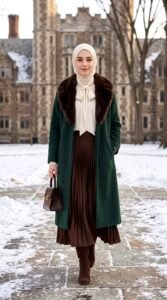
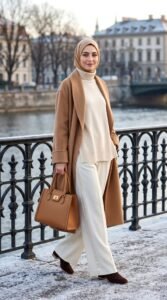
“Standing in front of a full closet with “nothing to wear” is a universal feeling — but for hijabi women, it comes with an extra layer. It’s not just “does this look good,” it’s “is it modest enough, is my hijab color right, can I move and pray comfortably in it, and will I still feel like myself?”
A modest capsule wardrobe solves all four questions at once. Instead of chasing trends piece by piece, you build a small, intentional collection — one palette, one set of silhouettes — and let the formulas do the work. Fewer decisions every morning, more outfits than you’d expect, no more impulse buys that never leave the hanger.”
The Right Hijab Colors for Your Skin Tone: A Complete Guide
Standing in front of a drawer full of hijabs and still reaching for the same three colors is a familiar frustration. The right hijab color does more than complete an outfit — it brightens the face, softens tired skin, and makes even a simple look feel put-together. The wrong one can wash you out no matter how beautiful the fabric is. The difference almost always comes down to one thing: undertone.
Warm, Cool, or Neutral — Finding Your Undertone
Before choosing colors, it helps to know your undertone, since this (not how light or dark your skin is) decides which shades will flatter you. A simple check: look at the veins on the inside of your wrist in natural light. Greenish veins usually mean a warm undertone; bluish or purple veins usually mean a cool undertone; if it’s hard to tell, you likely lean neutral. Gold jewelry looking better than silver is another common sign of warm undertones, and the reverse for cool ones.
Best Hijab Colors for Warm Undertones
Warm undertones glow next to earthy, golden-based shades: camel, olive, terracotta, mustard, warm burgundy, and soft coral. These colors echo the same golden base already in the skin, which is why they look rich rather than flat. Cool, icy tones like pure white or silver-grey can sometimes make warm skin look sallow by contrast.
Best Hijab Colors for Cool Undertones
Cool undertones come alive next to blue-based shades: jewel tones like sapphire, emerald, and amethyst, along with true red, rose pink, and crisp white. These colors balance the pink or blue base in the skin rather than fighting it. Orange-leaning shades like mustard or rust can sometimes look slightly harsh against cool undertones.
Best Hijab Colors for Neutral Undertones
Neutral undertones are the most flexible, sitting comfortably between warm and cool palettes. Dusty rose, taupe, soft teal, and muted lavender tend to look especially elegant, and neutral skin can usually borrow colors from both the warm and cool lists without much risk.
The Colors That Work for (Almost) Everyone
A handful of shades flatter nearly every undertone because they sit in the middle of the color wheel: soft ivory, charcoal grey, dusty rose, and deep navy. These are worth having in multiples, since they pair easily with almost any outfit and skin tone.
Building a Hijab Color Wardrobe, Not Just a Collection
Once undertone is clear, building a hijab wardrobe becomes much simpler: a handful of true flattering colors will always look more polished than a drawer of twenty hijabs that don’t quite work. The Modest Capsule Wardrobe guide takes this further, pairing each of its 100 outfit formulas with its exact matching hijab color — plus two flattering alternatives for each — so the color decision is already made before getting dressed.
Knowing the right palette is the first step; having it mapped to real, ready-to-wear outfits is what actually saves time every morning. That’s exactly what the Modest Capsule Wardrobe guide does — 100 complete outfit formulas, each one labeled with its ideal hijab color and two backup options, built from just 25 timeless pieces.
What to Wear as a Hijabi Wedding Guest: A Complete Style Guide
Being invited to a wedding as a hijabi guest brings its own, very specific styling puzzle: the outfit needs to be elegant enough for the occasion, modest enough to move and pray comfortably in, and different enough from the bride’s own palette so it never competes. Add the question of what time of day the wedding is, indoor or outdoor, and whether there’s dancing involved, and “what to wear” can get complicated fast.
Reading the Wedding First
Before choosing anything, a few details decide the whole outfit: Is it daytime or evening? Is it inside a ballroom or outdoors in a garden? Is it a close family wedding or a larger, more formal one? A daytime garden wedding calls for lighter fabrics and softer colors, while an evening ballroom wedding can carry richer fabrics — velvet, satin, embellished chiffon — and deeper jewel tones.
Colors to Wear, and Colors to Avoid
The only hard rule at most weddings is to avoid white, ivory, or anything that could be mistaken for the bride’s color from a distance. Beyond that, jewel tones (emerald, sapphire, burgundy, amethyst) and warm metallics (bronze, champagne, antique gold) photograph beautifully and read as celebratory without upstaging anyone. Soft neutrals — dusty rose, taupe, soft blush — work well for daytime or more intimate weddings.
The Silhouette That Works for Every Wedding
A long, flowing dress or a modest two-piece set (a maxi skirt with a matching or coordinating top) tends to be the most reliable choice: elegant in photos, comfortable for sitting and standing through a long ceremony, and easy to layer with an abaya-style topper or embellished cape if the venue is cold or more conservative. Structured separates — a tailored blazer dress or a modest jumpsuit — are a strong alternative for daytime or more contemporary weddings.
Getting the Hijab Right for the Occasion
The hijab is where a wedding-guest look is finished, not started: a draped chiffon or satin hijab in a color that either matches the outfit or pulls in its accent color looks more intentional than one chosen as an afterthought. For evening weddings, a side-pinned drape with a decorative pin or brooch adds polish without needing jewelry elsewhere.
Practical Details That Save the Night
A few small decisions matter more than they seem: block heels or embellished flats over anything unstable for standing through long ceremonies and dancing, a structured clutch big enough for essentials but not a full handbag, and a light shawl or cape in case the venue runs cold or prayer is needed during the event.
Every one of these decisions — color, silhouette, hijab styling, and the finishing details — is exactly what the Lumière Wedding Guest collection was built around: a full section of modest, embellished wedding-guest looks, each one photographed, styled, and ready to recreate or have tailored.
Explore Lumière on Amazon
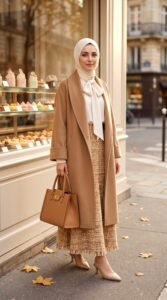 A versatile cardigan — works over nearly anything, instantly layers up a plain outfit